

Elbow Fracture Specialist in Encino, Thousand Oaks, CA
Elbow fractures involve breaks in one or more of the bones that make up the elbow joint and can significantly affect arm movement and function. Daniel C. Acevedo M.D. provides diagnosis and individualized nonoperative and operative treatments for elbow fractures in Encino, Thousand Oaks, CA. Dr. Acevedo also provides the highest level of care throughout treatment and recovery. Contact Dr. Daniel C. Acevedo’s office for an appointment today!
Encino
Thousand Oaks
- Book an Appointment
Elbow Anatomy
The arm in the human body is made up of three bones that join to form a hinge joint called the elbow. The upper arm bone or humerus connects from the shoulder to the elbow to form the top of the hinge joint. The lower arm or forearm consists of two bones, the radius and the ulna. These bones connect the wrist to the elbow forming the bottom portion of the hinge joint.
What are Elbow Fractures?

Elbow fractures may occur from trauma, resulting from various reasons: a fall on an outstretched arm, a direct blow to the elbow or an abnormal twist to the joint beyond its functional limit.
What are the Types of Elbow Fractures?
The types of elbow fractures include:
- Radial head and neck fractures: Fractures in the head portion of the radius bone are referred to as radial head and neck fractures.
- Olecranon fractures: These are the most common elbow fractures, occurring at the bony prominence of the ulna.
- Distal humerus fractures: These fractures are common in children and the elderly. Nerves and arteries in the joint may sometimes be injured in these fractures.
Symptoms of Elbow Fractures
The symptoms of an elbow fracture may include pain, bruising, stiffness, swelling in and around the elbow, popping or cracking sound, numbness or weakness in the arm, wrist, and hand, and deformity of the elbow bones.
Diagnosis of Elbow Fractures
To diagnose an elbow fracture, your doctor will review your history, perform a thorough physical examination and order X-rays of the joint. In some cases, a CT scan may be needed to view the details of the joint surface.
Treatment Options for Elbow Fractures
The aim of treatment is to maximize early motion and reduce the risk of stiffness. Non-surgical treatment options include pain medication, ice application, the use of a splint or a sling to immobilize the elbow during the healing process, and physical therapy.
Surgery is indicated in displaced and open fractures to realign the bones and stabilize the joint with screws, plates, pins and wires. Strengthening exercises are recommended to improve the range of motion.
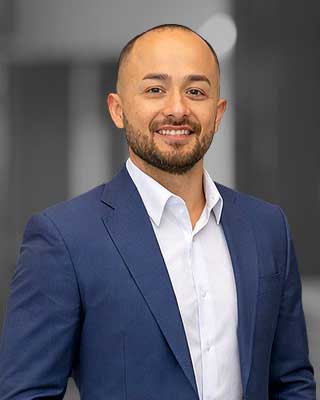
Daniel C. Acevedo M.D.
Board Certified & Fellowship Trained Shoulder & Elbow Reconstruction Specialist
Dr. Daniel Acevedo, is a Board Certified Orthopedic Surgeon with a subspecialty focus on shoulder and elbow reconstruction. He grew up in Southern California and attended UC Irvine for his undergraduate and medical school training.
Why Choose Dr. Acevedo for Elbow Fracture Treatment
Patients choose Daniel C. Acevedo for elbow fracture care because of his specialized expertise in treating both simple and complex fractures with a focus on restoring function and long-term joint health.
Reasons to choose Dr. Acevedo include:
- Fellowship-trained specialist focused exclusively on shoulder and elbow conditions
- Extensive experience treating all types of elbow fractures, including olecranon, radial head, and distal humerus fractures
- Expertise in both non-surgical fracture care and advanced surgical fixation techniques
- Comprehensive evaluation of bone alignment, joint stability, and surrounding structures
- Personalized treatment plans based on fracture type, severity, and patient activity level
- Focus on restoring proper alignment, stability, and range of motion
- Advanced surgical techniques using plates, screws, or pins when needed
- Emphasis on early motion and rehabilitation to prevent stiffness
- Experience managing both traumatic injuries and sports-related fractures
- Goal-oriented care to help patients return to daily activities, work, and sports safely
Elbow Fracture FAQs
What causes an elbow fracture?
Elbow fractures are usually caused by trauma, such as a fall onto an outstretched arm, a direct blow to the elbow, or sports-related injuries.
Do all elbow fractures require surgery?
No, not all elbow fractures require surgery. Stable, non-displaced fractures can often be treated with a splint, brace, or cast. Surgery is usually recommended if the bones are out of alignment or the fracture is unstable.
How long does it take to recover from an elbow fracture?
Recovery time varies depending on the type of fracture and treatment. Many fractures heal within 6 to 8 weeks, but full recovery, including strength and motion, may take several months.
When can I return to normal activities after an elbow fracture?
Return to normal activities depends on healing and rehabilitation progress. Light activities may resume within a few weeks, while full return to sports or heavy use may take several months. Your doctor will guide your recovery timeline.
What complications can occur with an elbow fracture?
Possible complications include stiffness, limited range of motion, nerve or blood vessel injury, and improper healing of the bone. Early treatment and rehabilitation help reduce these risks.
Schedule an Elbow Fracture Consultation in Encino, Thousand Oaks, CA
If you would like additional information on elbow fracture treatment or would like to learn more about recovery options after elbow injury, please contact Daniel C. Acevedo M.D., serving the communities of Encino, Thousand Oaks, CA, and surrounding Southern California areas.