
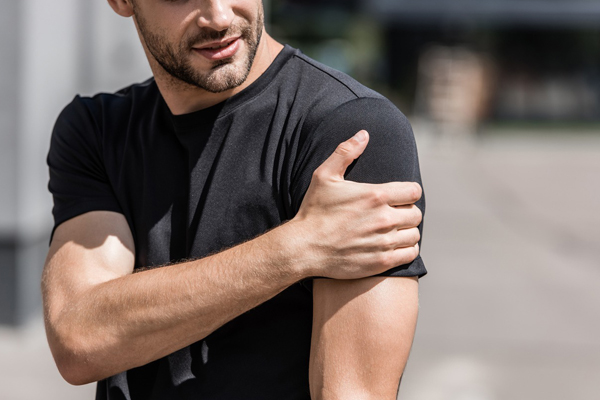
Shoulder pain that stems from structural damage, such as a torn ligament, a chronically unstable joint, a severely damaged rotator cuff, is different from the everyday aches that rest and time can resolve. When the architecture of your shoulder has been compromised, the body often can't heal itself back to full function. That's where shoulder reconstruction comes in.
For patients in Encino and the greater Los Angeles area, access to a fellowship-trained shoulder reconstruction specialist means access to the kind of advanced surgical solutions that restore not just comfort, but true, lasting function. Here's what you need to know.
What Is Shoulder Reconstruction?
Shoulder reconstruction refers to a category of surgical procedures designed to repair, rebuild, or restore the structural integrity of the shoulder joint. Unlike shoulder replacement, which substitutes damaged joint surfaces with prosthetic components, reconstruction focuses on preserving and rebuilding the natural anatomy of the shoulder, using the patient's own tissue, donor grafts, or advanced biologic materials to restore what was damaged or lost.
Reconstruction is often the preferred approach for younger, more active patients who need a durable, long-term solution that will hold up to an active lifestyle.
Common shoulder reconstruction procedures include:
- Rotator cuff repair - Reattaching torn tendon tissue to the bone to restore strength and range of motion
- Superior capsular reconstruction (SCR) - A technique for massive, irreparable rotator cuff tears that uses a graft to restore joint stability when the tendons can no longer be repaired directly
- Shoulder instability surgery - Repairing or tightening the ligaments and capsule that keep the shoulder in place, often after chronic dislocations
- Bankart repair - Reattaching the torn labrum (the cartilage rim of the socket) to restore stability after dislocation
- Latarjet procedure - A bone-block procedure for severe instability cases involving significant bone loss
- AC joint reconstruction - Rebuilding the acromioclavicular joint after separation injuries
- Biceps tendon repair - Reattaching a ruptured proximal or distal biceps tendon
Each of these procedures requires precise technique, a thorough understanding of shoulder anatomy, and the judgment to select the right approach for each patient's unique situation.
When Is Shoulder Reconstruction Necessary?
Not every shoulder injury requires reconstruction. Many conditions respond well to conservative care such as physical therapy, anti-inflammatory medications, corticosteroid injections, and activity modification. Surgery becomes the right recommendation when:
- Structural damage is too severe for the body to heal on its own
- Conservative treatment has failed to provide meaningful, lasting relief
- Instability is recurrent, meaning the shoulder continues to dislocate or subluxate despite rehabilitation
- A massive rotator cuff tear has left the joint without the muscular support it needs to function
- Bone loss has compromised the socket in ways that soft tissue repair alone cannot address
- The patient's activity level and age make preservation of the natural anatomy the preferred long-term strategy
A fellowship-trained specialist will evaluate all of these factors carefully before recommending any surgical intervention and will always present non-surgical options where they are genuinely viable.
The Role of Biologic Augmentation in Modern Shoulder Reconstruction
One of the most exciting frontiers in shoulder surgery is the use of biologic augments that are used to reinforce repairs, encourage healing, and improve long-term durability.
In rotator cuff reconstruction in particular, biologic augmentation is increasingly used to strengthen tendon repairs in patients where the tissue quality is poor, the tear is large, or the risk of re-tear is elevated. Research in this area is advancing rapidly, and surgeons who are actively engaged in the latest evidence are best positioned to offer these options to their patients.
Dr. Acevedo has a specific research interest in biologic augments for rotator cuff tendon repair, an area where his published work places him at the leading edge of what modern shoulder reconstruction can achieve.1
Why Fellowship Training Makes the Difference
Shoulder reconstruction is among the most technically demanding work in orthopedic surgery. The procedures are highly varied, the anatomy is complex, and the margin for error is narrow. A surgeon who has completed a dedicated shoulder and elbow fellowship has spent an entire additional year performing and refining these exact procedures under the guidance of world-class mentors.
That training translates directly into:
- More accurate preoperative planning, including the use of advanced imaging and patient-matched technology to anticipate challenges before entering the operating room
- Refined intraoperative technique, reducing operative time and tissue disruption
- Broader procedural expertise, meaning the surgeon can adapt when anatomy or tissue quality presents unexpected challenges
- Better outcomes data, because fellowship-trained specialists tend to perform higher volumes of complex procedures and track results more rigorously
For a procedure as consequential as shoulder reconstruction, who performs your surgery is one of the most important decisions you will make.
Arthroscopic vs. Open Reconstruction: Understanding Your Options
Many shoulder reconstruction procedures can today be performed arthroscopically through small portals using a camera and specialized instruments, rather than a large open incision. Arthroscopic techniques generally offer:
- Less disruption to surrounding muscles and soft tissue
- Reduced post-operative pain
- Lower infection risk
- Faster initial recovery
However, some reconstructive procedures, particularly those involving bone grafting, severe instability with bone loss, or complex revision cases, are better suited to open or mini-open approaches that allow the surgeon greater access and control.
An experienced shoulder surgeon will recommend the approach most likely to achieve the best long-term outcome for your specific anatomy and diagnosis, not simply the approach that is most technically straightforward.
What to Expect: Recovery from Shoulder Reconstruction
Recovery from shoulder reconstruction varies depending on the procedure, but most patients move through a similar set of stages:
Phase 1 - Protection (weeks 1 - 6): The repaired structures are protected as initial healing takes place. The arm is typically kept in a sling, with gentle passive range-of-motion exercises guided by a physical therapist.
Phase 2 - Restoration of Motion (weeks 6 - 12): As healing progresses, therapy shifts toward restoring range of motion and beginning gentle strengthening.
Phase 3 - Strengthening (months 3 - 6): Progressive resistance training rebuilds the strength and neuromuscular control the shoulder needs for functional use.
Phase 4 - Return to Activity (months 6 - 12+): Depending on the procedure and your activity goals, return to sport, overhead work, or physically demanding activities is typically cleared in this phase.
Staying consistent with physical therapy and follow-up appointments is one of the most important things you can do to protect your surgical outcome. Dr. Acevedo and his team will be with you at every stage, adjusting your plan as your recovery progresses.
Shoulder Reconstruction FAQs
Q: How is shoulder reconstruction different from shoulder replacement?
A: Shoulder replacement substitutes the damaged joint surfaces with prosthetic components, while reconstruction focuses on repairing and rebuilding the shoulder's natural anatomy using tissue grafts, anchors, and biologic materials. Reconstruction is generally preferred for younger, more active patients; replacement is more commonly recommended for older patients with advanced arthritis or irreparable structural damage.
Q: Can a previously failed shoulder surgery be reconstructed?
A: Yes. Revision shoulder surgery, reconstructing a shoulder that has had a prior failed repair, is a subspecialty within shoulder surgery that requires significant expertise. Dr. Acevedo has experience managing complex revision cases and will conduct a thorough evaluation to determine the most appropriate reconstructive approach.
Q: Will I need a brace or sling after shoulder reconstruction?
A: Most patients will use a sling for four to six weeks following reconstruction to protect the repair during initial healing. The exact duration depends on the procedure and your surgeon's protocol. Dr. Acevedo will give you clear instructions on sling use and activity restrictions from the moment you leave the operating room.
Q: How do I know if biologic augmentation is right for my rotator cuff repair?
A: Biologic augmentation is typically considered for patients with large or massive rotator cuff tears, poor tissue quality, or elevated risk of re-tear. Your surgeon will assess these factors during your evaluation and recommend augmentation when the evidence suggests it will meaningfully improve the durability of your repair.
Q: Is shoulder reconstruction covered by insurance?
A: Most shoulder reconstruction procedures are covered by insurance when they are deemed medically necessary. Dr. Acevedo's office can assist you in navigating prior authorization requirements and understanding your coverage before surgery is scheduled.
Ready to Rebuild What's Been Lost?
If you've been living with a shoulder that doesn't work the way it should, whether from a traumatic injury, a failed previous repair, or a condition that has gradually eroded your joint shoulder reconstruction may be the path to getting back to function. Dr. Acevedo brings surgical precision, research-backed technique, and a genuinely patient-centered approach to every case he takes on. Contact Dr. Acevedo's office today to schedule your consultation.
About Dr. Daniel Acevedo, MD. Dr. Acevedo is a board-certified orthopedic surgeon and fellowship-trained shoulder and elbow specialist practicing in Encino, Newhall, and Thousand Oaks, California. He completed his fellowship at the Rothman Institute at Thomas Jefferson University Hospital and has authored over 30 peer-reviewed articles on shoulder and elbow surgery. Dr. Acevedo is dedicated to helping patients find lasting relief through expert, compassionate orthopedic care.
Disclaimer
The information provided on this page is intended for educational purposes only and should not be considered medical advice. Always seek the guidance of a qualified physician regarding any medical condition or treatment.
Reference:
1- https://pubmed.ncbi.nlm.nih.gov/31457066/